Faculty of Engineering and Technology

DISCOVER WHAT'S NEW

Explore the latest developments, achievements, and research making an impact in engineering.


Highlights from around the Faculty.

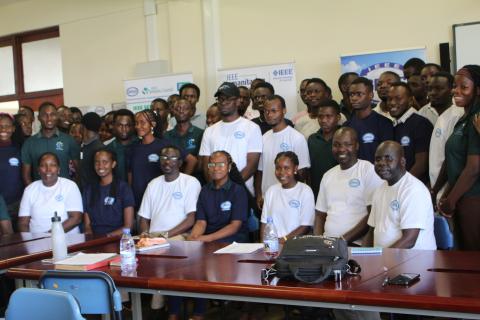
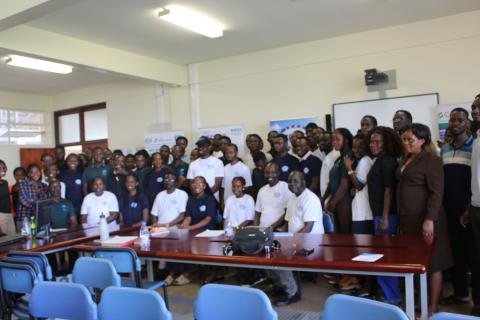
Busitema unversity students and the team from IEEE in the E learning center

IEEE OFFICIALLY INITIATES A STUDENT BRANCH AT BUSITEMA UNIVERSITY

26 October 2026

Busitema University was on the verge of officially having an IEEE Student Branch. The branch petition was approved by the IEEE Uganda Section Chair and advanced to the IEEE Region 8 Director for the final stage of approval. after confirmation, Busitema joined universities such as Makerere, Kyambogo, MUST, Ndejje and others that already host IEEE Student Branches.Why This Milestone Matters•    Expands IEEE’s presence in Uganda.•    Strengthens student engagement across engineering and technology disciplines.•    Creates more opportunities for students to take part in innovation, professional development and technical activities.  IEEE Interdisciplinary Seasonal School 2026To mark this progress, Busitema University hosted an IEEE workshop on 23rd and 24th October 2026, which also introduced the opening of an IEEE chapter at the university.•    Theme: Signal Processing, Smart Sensors, IoT, Photonics and Remote Sensing for Humanitarian Applications.•    Format: Hands-on practice for students, including coding and Arduino projects.•    Dates: Friday 23rd and Saturday 24th October 2026.Special ThanksWe sincerely thank the following people for their support and guidance:•    Prof. Biira Saphina, Deputy Vice Chancellor (Academics)•    Dr. Angole Richard•    Dr. Adong Grace, Students’ Counsellor•    Eng. Kilama George the head of department•    IEEE Uganda Section Committee members: Eng. Vincent Olema and Eng. Asumogi AlfredCongratulations to everyone who has contributed to making this possible. We are almost there.AchievementsStudents at the engineering faculty has more a session to interact with the engineering world through the coding and developing Arduino projects which is a crucial basis in the remote sensing world 
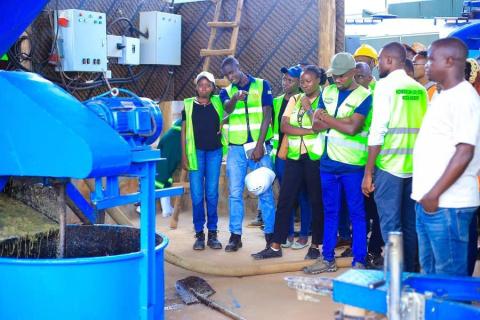
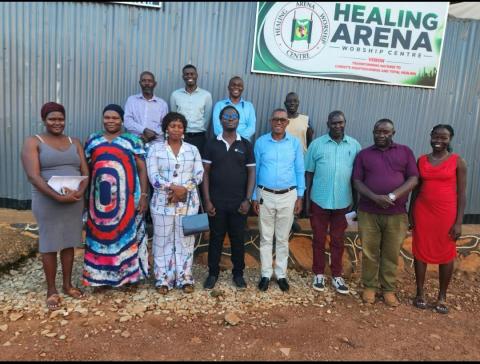
Students and staff from department of Water Resources Engineering at Wabigalo, Kampala, and Homeklin Uganda Ltd

Busitema University Advancing Sustainable Waste Management

26 October 2026

On 14 October 2026, students and staff from Busitema University-Faculty Of Engineering And Technology, the Department of Water Resources Engineering undertook a field visit to Wabigalo, Kampala, and HomeKlin Uganda Ltd. The initiative seeks to transform Wabigalo into a living laboratory for sustainable solid-waste management through community engagement, research and innovation. The Department also envisages a partnership with HomeKlin Uganda, whose waste-to-resource technologies produce biogas and liquid organic fertilizer, to advance waste recovery, improve sanitation and promote a circular economy.From waste challenges to sustainable solutions! 

news

IEEE Workshop Equips Students with Practical Skills in Emerging Technologies

24 October 2026

Students and young professionals at Busitema University are gaining hands-on experience in emerging engineering technologies as the 2026 IEEE Interdisciplinary Seasonal School begins at the university’s Faculty of Engineering Library. The two-day workshop, running from October 23 to 24, is bringing together students, young professionals and researchers to explore how technologies such as smart sensors, the Internet of Things (IoT), signal processing, remote sensing, Geographic Information Systems (GIS), photonics and Arduino electronics can be used to address challenges facing communities.The programme is being organised by the IEEE Uganda Section Sensors Council, GRSS and SPS Joint Chapter, in collaboration with IEEE partners. It is being conducted in a hybrid format, allowing participants to attend either physically or online. A major focus of the workshop is hands-on learning. Students have been divided into groups and are taking part in practical exercises designed to help them move beyond classroom theory and gain experience working with technology.During the practical sessions, participants are learning how to build simple electronic circuits, connect LEDs and sensors, and use Arduino boards to test basic ideas. They are also being introduced to how smart devices collect, process, and share information.The workshop is also exposing participants to the use of satellite images, mapping and other tools for monitoring the environment. These technologies can support work in areas such as agriculture, water management and environmental protection.Organisers say the programme is designed to address a common challenge among engineering students: having a strong understanding of concepts but limited opportunities to work with equipment, build prototypes and test solutions to real-world problems.Through demonstrations, technical sessions and group activities, participants are being encouraged to work together to develop simple technology-based solutions to problems in their communities.The organisers are particularly interested in applications that can help improve environmental monitoring, agricultural productivity, water quality, connectivity and access to affordable technology.Beyond technical training, the Seasonal School is providing an opportunity for students to interact with researchers, industry professionals and members of IEEE technical societies. The organisers say these interactions can help participants build professional networks, find mentors and identify opportunities for future collaboration.By the end of the two-day programme, participants are expected to have gained basic practical skills, increased confidence in experimenting with engineering technologies, and developed a better understanding of how emerging technologies can contribute to humanitarian and community development.The workshop ultimately seeks to turn classroom knowledge into practical action, giving young engineers the tools and confidence to develop affordable solutions to challenges affecting their communities

news

Advances Sustainable Waste Management Through Community Innovation

24 October 2026

Busitema University is stepping up efforts to promote sustainable waste management, with a field-based initiative bringing together students, staff, communities and private-sector innovators to explore practical solutions to Uganda’s growing solid-waste challenges. On 14 October 2026, students and staff from the Department of Water Resources Engineering visited Wabigalo, Kampala, and HomeKlin Uganda Ltd. as part of an initiative to explore innovative approaches to waste management and resource recovery. The visit supports the Department’s broader vision to transform Wabigalo into a living laboratory for sustainable solid-waste management, a real-world setting where research, community engagement, and innovation can come together to address pressing environmental and sanitation challenges. At Wabigalo, the team had an opportunity to engage with the realities of waste management at the community level, gaining practical insights into the challenges associated with waste generation, collection, handling, and disposal.  The initiative goes beyond identifying challenges. It seeks to develop solutions that can be tested and refined in collaboration with the communities that experience waste-management problems firsthand.  A key component of the field visit was an engagement with HomeKlin Uganda Ltd., where the university team explored waste-to-resource technologies designed to convert organic waste into useful products.  The company’s technologies include the production of biogas and liquid organic fertilizer, demonstrating how waste that would otherwise contribute to environmental pollution can be recovered and transformed into valuable resources.  For Busitema University, the engagement presents an opportunity to strengthen collaboration between academia and industry while exposing students to practical technologies that support sustainable development.  The proposed partnership with HomeKlin Uganda is expected to focus on waste recovery, improved sanitation and the advancement of a circular economy, in which resources are recovered, reused and kept in productive use for as long as possible.  The field visit also highlights the Department of Water Resources Engineering’s commitment to taking learning and research beyond the classroom.  By using Wabigalo as a potential living laboratory, students and researchers can engage directly with real-world environmental challenges while communities benefit from research-driven approaches to waste management. Such an approach could provide a platform for testing technologies, generating local knowledge and developing solutions that are responsive to the needs of urban communities.

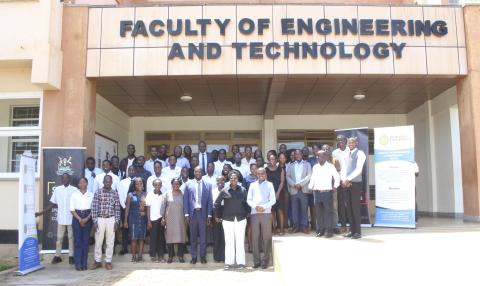
Busitema University officials, Ministry of Health representatives and student peer supporters pose for a group photograph during the launch of the five-day self-care and wellbeing programme at the Faculty of Engineering and Technology, Busitema Campus, on 19 October 2026.

Ministry of Health Begins Five-Day Self-Care and Wellbeing Programme at Busitema University at the Faculty Of Engineering And Technology

19 October 2026

The Ministry of Health has commenced a five-day programme of self-care and wellbeing engagements at Busitema University today, Monday, 19 October 2026, aimed at strengthening health awareness, promoting self-care practices and improving access to healthcare services among students and the wider University communityDuring the session the students peers were trained to be authentic medical ambassadors in the students community.With this background the student peers then were trained on the principles of Self Testing, at the end of the session they were trained on how to use the testing kits of HIV 

Star-c

New Solar Resource Hub at Busitema University Drives Uganda's Green Energy Transition

6 May 2026

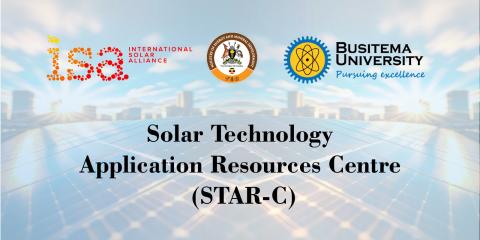
In a major stride toward continental green energy leadership, Busitema University has officially launched the Solar Technology Application Resource Centre (STAR-C) at its main campus. The specialized facility establishes Uganda as a pivotal hub in the rapidly expanding African solar market.The STAR-C initiative is engineered to bridge the gap between theoretical research and practical marketplace application. The center introduces a robust framework dedicated to:Advanced Research: Developing localized solar solutions tailored to regional climate realities.Technical Training: Equipping engineering students and industry professionals with hands-on, modern solar competencies.Technology Standardization: Promoting rigorous application standards for renewable hardware.The establishment of STAR-C directly leverages Busitema University's deep institutional expertise. Founded in 2007 as a multi-campus public institution, Busitema has built a strong national reputation for its rigorous engineering and environmental science faculties.This new center capitalizes on that foundation, transforming the university's technical infrastructure into a commercial launching pad for clean energy innovations.